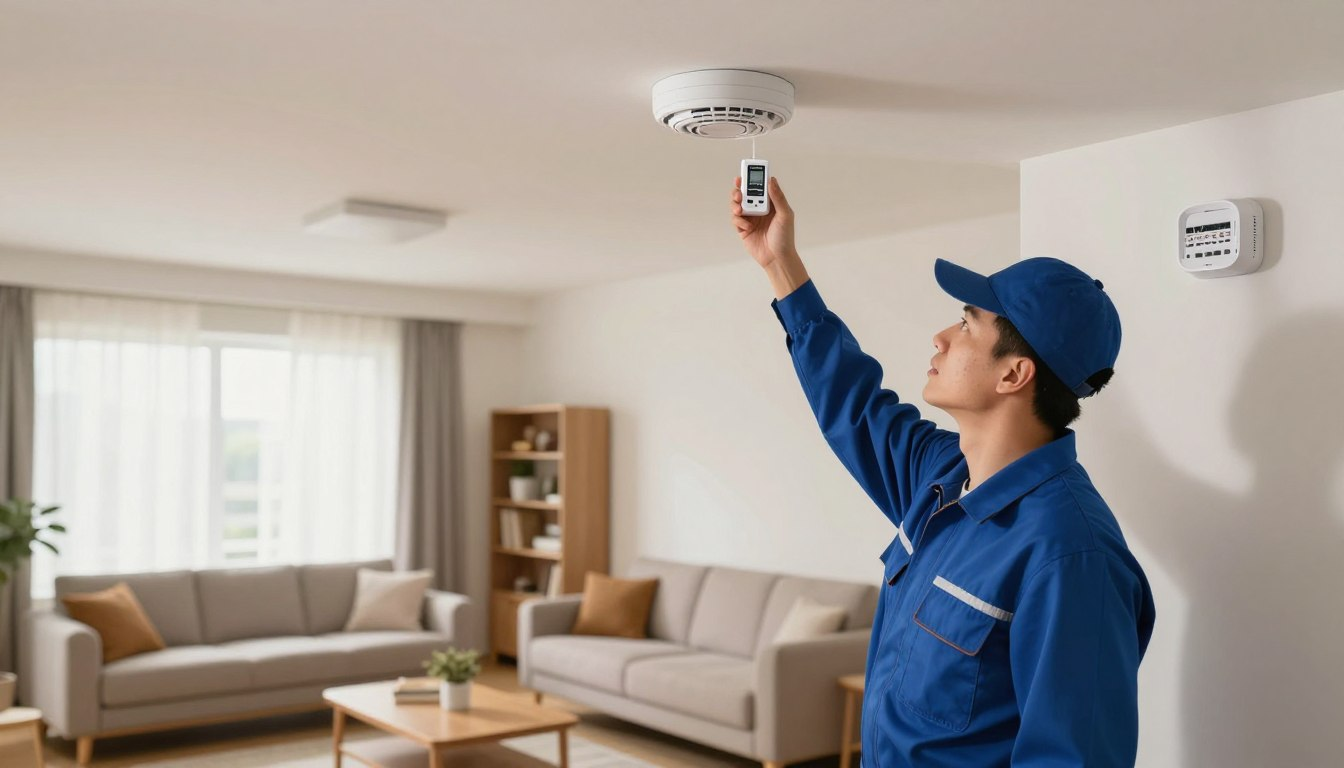
Checking these devices is more than just looking up at the ceiling. A regular fire alarm inspection finds problems before they become big dangers. You need to test sensors, find the best spots, and keep a strict battery schedule.
Regular smoke alarm maintenance makes sure they work when you need them most. These small steps can stop big losses and give you peace of mind. With a clear plan, you make your home safer for everyone.
Keeping your equipment in good shape is key for home owners in the United States. Every second counts during a fire, so your systems must work perfectly. Start your safety journey now to protect your loved ones.
Key Takeaways:
• Test units monthly to confirm they work correctly.
• Change batteries twice a year for total reliability.
• Place alarms on every level and inside all bedrooms.
1. Why Proper Smoke Alarm Maintenance Protects Your Family
Smoke alarms are key to keeping your family safe from fires. Keeping them working is more than cleaning. It’s a vital part of home safety tips that can save lives.
Smoke alarms work best when they’re well taken care of. A good smoke alarm can save lives in a fire.
The Critical Difference Between Working and Non-Working Detectors
The National Fire Protection Association (NFPA) says homes without working smoke alarms are much more dangerous. They have a death rate more than twice as high as homes with working alarms. This shows how critical it is to have smoke detectors that work.
Fire Safety Statistics Every Homeowner Should Know
Knowing fire safety facts can make homeowners take fire prevention measures seriously. For example, working smoke alarms can cut the risk of dying in a fire by half. Keeping them in good shape is essential.
Insurance and Liability Considerations for Detection Device Maintenance
Not taking care of detection device maintenance can lead to big problems with insurance and liability. Homeowners who ignore this might see their premiums go up or even have claims denied in a fire.
By focusing on smoke alarm upkeep, homeowners keep their families safe. They also might lower their insurance costs. This makes it a key part of keeping your home safe.
2. Understanding the Different Types of Smoke Detection Devices
To keep your home safe from fires, it’s important to know about smoke detectors. There are many kinds of smoke detectors. Each one is good at finding different types of fires.
Ionization Smoke Detectors and Fast-Flaming Fire Detection
Ionization smoke detectors are great for fast-flaming fires. They use a tiny bit of radioactive stuff to make the air inside the detector charged. When smoke gets in, it messes with this charge, setting off the alarm.
Photoelectric Smoke Detectors for Smoldering Fire Protection
Photoelectric smoke detectors are best for smoldering fires. They send out a light beam into a special area. If smoke gets in there, it bounces the light, which alerts the sensor and sounds the alarm.
Dual-Sensor Technology for Complete Coverage
Dual-sensor tech mixes ionization and photoelectric tech. This gives you protection against both fast and slow fires.
Smart Connected Alarms and Modern Fire Safety Equipment
Smart connected alarms are the newest in smoke detection. They can talk to each other wirelessly. They can even send alerts to your phone, even if you’re not home.
Let’s look at how different smoke detectors compare:
| Type | Detection Strength | Key Features |
|---|---|---|
| Ionization | Fast-flaming fires | Uses radioactive material to detect smoke particles |
| Photoelectric | Smoldering fires | Uses light beam to detect smoke |
| Dual-Sensor | Both fast-flaming and smoldering fires | Combines ionization and photoelectric technologies |
| Smart Connected | Varies | Wireless connectivity, alerts on smartphones |
Knowing about the different smoke detectors is key to picking the right fire safety equipment for your home. The right smoke detector can really help you get ready for emergencies.
3. Strategic Smoke Detector Placement for Maximum Protection
To keep your home safe, it’s important to know where to put smoke detectors. The right spot can really help prevent fires and keep you safe.
Mandatory Installation Locations in Residential Homes
Smoke detectors need to go in important places to catch fires early. The National Fire Protection Association (NFPA) tells us where to put them.
Inside Every Bedroom and Sleeping Area
Smoke detectors in bedrooms and sleeping areas are key. They help find fires when people are most at risk.
Outside Each Separate Sleeping Area
Also, put detectors outside each sleeping area. This gives an early warning if a fire starts.
On Every Level Including Basements
Smoke detectors should be on every level, including basements. This makes sure your whole home is covered.
Having working smoke alarms cuts the risk of dying in a fire by nearly half, says the NFPA.
“Working smoke alarms cut the risk of dying in a home fire in half.”
— National Fire Protection Association
Additional Recommended Locations for Enhanced Safety
There are more places to put smoke detectors for extra safety.
- Near kitchens, but not so close that they trigger false alarms
- In garages, as they are a common source of fires
- In laundry rooms, due to the risk of lint fires
Where Never to Install Smoke Detectors
Some places are not good for smoke detectors. They can cause false alarms and not work right.
Kitchen and Bathroom Placement Mistakes
Don’t put smoke detectors in kitchens and bathrooms. Steam and cooking smells can set them off.
Avoiding Dead Air Spaces Near Corners and Peaks
Smoke detectors should not be in dead air spaces. Places like corners and peaks can block smoke.
Proper Ceiling and Wall Mounting Specifications
How you mount smoke detectors is very important. It affects how well they work.
| Mounting Location | Specification |
|---|---|
| Ceiling Mounting | At least 4 inches from the wall |
| Wall Mounting | Between 4-12 inches from the ceiling |
4. Step-by-Step Smoke Detector Testing Procedures

Testing your smoke detectors is key to keeping your home safe. It’s easy to do and makes sure they work when you need them most.
Monthly Test Button Inspection Protocol
First, check the test button on your smoke detector. This simple step helps you know if it’s working.
How to Properly Activate the Test Function
To test it, press and hold the test button until it sounds. This should only take a few seconds. Make sure the alarm is loud enough to wake you up from any room.
What a Functioning Alarm Should Sound Like
A good smoke alarm makes a loud, high-pitched sound. If it’s too quiet or doesn’t sound at all, it might need a new battery or fixing.
Testing Alarm Sensitivity with Approved Aerosol Sprays
For a deeper test, use a UL-listed smoke detector test aerosol. These sprays check if your alarm can spot smoke. Always read the instructions on the aerosol spray carefully.
Verifying Interconnected System Communication
If your smoke detectors are connected, test them together. This makes sure they all go off if one does. It’s important for safety in a fire.
Documenting Your Fire Alarm Inspection Results
Write down what you find after testing. This keeps track of your smoke detectors’ performance. It’s also good for insurance or when you sell your home. Note the date, results, and any changes you made.
By following these steps, you can make sure your smoke detectors work right. They’ll give you important warnings if there’s a fire.
5. Battery Replacement Schedule and Power Source Management
Managing your smoke detectors’ power is key to home safety. Keeping them in good shape means they work right when you need them.
Standard Battery-Powered Detector Replacement Timeline
Change the batteries in your smoke detectors every year. Or do it when the maker says to. This helps avoid a dead detector in a fire.
Hardwired Detector Backup Battery Maintenance
Hardwired smoke detectors need backup batteries too. Change these every year to keep them working in power outages.
10-Year Sealed Lithium Battery Advantages
Some detectors have 10-year lithium batteries. They don’t need yearly changes. This makes them easy to keep up with and reliable for a long time.
Recognizing and Responding to Low Battery Chirps
Smoke detectors chirp when the battery is low. It’s important to change the batteries fast. This keeps your home safe.
Best Battery Brands and Types for Optimal Performance
Picking the right battery is key for smoke detectors. Brands like Energizer and Duracell are top choices.
Here’s a look at different battery types for smoke detectors:
| Battery Type | Lifespan | Reliability |
|---|---|---|
| Alkaline | 1-2 years | Good |
| Lithium | 5-10 years | Excellent |
| Sealed Lithium | 10 years | High |
Knowing when to replace batteries makes smoke detectors work better. This keeps your home safer.
6. Your Complete Smoke Detector Checklist for Year-Round Safety

A good smoke detector can save lives in a fire. To keep your home safe all year, follow a smoke detector maintenance schedule. This guide will help you keep your smoke detectors working right.
Monthly Home Safety Tips and Quick Checks
Do monthly checks to make sure your smoke detectors work. Here’s what to do every month:
Test All Detectors Using the Test Button
Press the test button on each smoke detector. If it doesn’t sound, check the batteries or replace it.
Visual Inspection for Damage or Obstruction
Look for damage, dust, or blockages on each detector. Keep them clean and clear.
Verify Alarm Sound Audibility Throughout Home
Make sure the alarm is loud enough in every room. If not, move or add detectors.
Every Six Months: Deep Cleaning and Maintenance Tasks
Every six months, do a deeper clean and check on your smoke detectors.
Vacuuming Detector Vents and Sensors
Vacuum the vents and sensors gently to remove dust and debris.
Checking Manufacture Dates and Age
Check the manufacture date on your smoke detectors. If they’re 10 years old or more, replace them.
Annual Complete Fire Prevention Measures
Every year, take steps to make sure your smoke detectors and fire safety are good.
Replace All Standard Batteries
Replace the batteries in all your smoke detectors with new ones, even if they seem to be working fine.
Test with Aerosol Smoke Simulator
Use an aerosol smoke simulator to test your smoke detectors’ sensitivity.
Review and Update Emergency Escape Plans
Review your family’s emergency escape plan and update it as needed. Make sure everyone knows the plan and has practiced it.
10-Year Complete Unit Replacement Schedule
Smoke detectors have a limited lifespan. Replace all units that are 10 years old or more with new ones for safety.
| Maintenance Task | Frequency |
|---|---|
| Test detectors using test button | Monthly |
| Visual inspection for damage or obstruction | Monthly |
| Verify alarm sound audibility | Monthly |
| Vacuum detector vents and sensors | Every 6 months |
| Check manufacture dates and age | Every 6 months |
| Replace standard batteries | Annually |
| Test with aerosol smoke simulator | Annually |
| Review and update emergency escape plans | Annually |
| Replace complete units | Every 10 years |
7. Smoke Alarm Troubleshooting Guide for Common Problems
Smoke alarms are key for home safety. Simple steps can fix common problems. This keeps them working well.
Resolving Persistent False Alarms and Nuisance Triggers
False alarms can be a big problem. They might be caused by the environment or a faulty device. Finding the cause is the first step to fixing it.
Steam and Cooking Smoke Interference
Steam and cooking smoke can set off false alarms. Move smoke alarms away from kitchens and bathrooms to avoid this.
Dust and Insect Contamination Solutions
Dust and insects can make smoke alarms go off for no reason. Clean them with a soft brush or vacuum to stop this.
| Cause | Solution |
|---|---|
| Steam/Cooking Smoke | Install away from kitchens/bathrooms |
| Dust/Insects | Regular cleaning with soft brush or vacuum |
Stopping Continuous Chirping Beyond Low Battery Warnings
Continuous chirping means there’s a problem. Check the battery and clean the alarm to fix it.
“Regular maintenance of smoke detectors is key for them to work right.”
N.F.P.A.
Addressing Alarms That Won’t Stop Sounding
A smoke alarm that won’t stop is serious. It might be smoke or a problem with the alarm. Get out and call the fire department or a pro.
Fixing Connectivity and Communication Issues in Networked Systems
Interconnected smoke alarms need to be connected right. Resetting or replacing units can fix problems.
When to Replace Instead of Repair
Knowing when to replace a smoke alarm is important. Alarms over 10 years old or ones that keep breaking should be replaced.
By following these steps, you can keep your smoke alarms working. This makes your home safer and better prepared for emergencies.
8. Integrating Smoke Detectors into Your Emergency Preparedness Plan

Adding smoke detectors to your emergency plan is key to keeping your home and family safe. A good plan includes smoke detectors, escape routes, and how to communicate in emergencies.
Coordinating Smoke and Carbon Monoxide Detector Placement
Put smoke detectors on every floor and in bedrooms. Make sure carbon monoxide detectors are near beds and on all floors too.
Creating and Practicing Family Fire Escape Routes
It’s important to have a plan for escaping in case of fire. Teach everyone at least two ways out of each room. Pick a spot outside where everyone can meet after escaping.
Establishing External Meeting Points and Communication Protocols
Choose a safe spot outside for family to meet after escaping. Pick a contact person outside the home. This way, everyone knows who to call if you get lost.
Additional Fire Safety Equipment Every Home Needs
Every home needs fire extinguishers, a ladder for high floors, and a first aid kit. Check these items often to make sure they work.
| Fire Safety Equipment | Purpose | Maintenance Schedule |
|---|---|---|
| Smoke Detectors | Early fire detection | Test monthly, replace batteries annually |
| Fire Extinguishers | Put out small fires | Inspect monthly, recharge annually |
| Fire Escape Ladder | Provide secondary escape route | Inspect annually, practice deployment |
9. Meeting Fire Safety Codes and Regulatory Requirements
Following fire safety rules is not just a must. It’s key to keep people and buildings safe. The National Fire Protection Association (NFPA) 72 standards help make sure smoke detectors work right.
National Fire Protection Association NFPA 72 Standards
The NFPA 72 rules are used all over the U.S. They give clear steps for setting up, testing, and keeping fire alarm systems, like smoke detectors, in good shape. The NFPA says, “The NFPA 72 is dedicated to the performance, installation, testing, and maintenance of fire alarm systems, including smoke detectors.”
“The NFPA 72 is dedicated to the performance, installation, testing, and maintenance of fire alarm systems, including smoke detectors.”
NFPA
These rules cover many things. Like what kind of smoke detectors to use, where to put them, and how often to check and fix them.
State and Local Building Code Compliance
State and local building codes also set fire safety rules. These codes might have special rules for smoke detectors in new buildings or when fixing old ones. It’s important for homeowners and building managers to know these rules to follow them.
Special Requirements for Rental Properties and Multi-Family Dwellings
Rental places and big buildings have extra fire safety rules. For example, landlords must make sure smoke detectors work and teach tenants how to get out in case of fire. Checking and fixing smoke detectors often is very important to avoid legal problems.
Home Sale Inspection and Certificate of Occupancy Rules
When selling a house, fire safety gear, like smoke detectors, gets checked. Sellers might need to fix any problems found to get a certificate of occupancy. Making sure smoke detectors meet the rules can help the sale go smoothly.
By knowing and following these rules, people can avoid legal trouble. They also make their homes and buildings much safer.
10. Conclusion
It’s very important to make sure your smoke detectors work right. This keeps your home and family safe. You should check your fire alarm inspection and maintenance often.
By using the smoke detector checklist from this article, you can lower fire risks a lot. This means testing detectors every month, changing batteries when needed, and knowing about different smoke detectors.
Adding these home safety tips to your daily life can give you peace of mind. It also helps keep your family safe. A good smoke detector is your first defense against fires.
Start taking action today to keep your home safe for many years.
FAQ
Q: How often should I perform smoke detector testing?
A: Test your smoke detectors monthly with the test button. Use a smoke simulation spray once a year for a full check.
Q: Where is the most important place to install fire safety equipment?
A: NFPA says put detectors in bedrooms, outside sleeping areas, and on every level. Don’t forget the basement or stairways.
Q: What are the best batteries to use for smoke alarm maintenance?
A: Use high-quality alkaline batteries like Energizer Max or Duracell Coppertop. Avoid rechargeable batteries as they lose power fast.
Q: Why does my smoke alarm keep chirping even after I changed the battery?
A: It might mean the battery was put in wrong, there’s dust, or the detector is old. It needs to be replaced.
Q: Do I really need to replace my smoke detector every 10 years?
A: Yes. Detectors get less reliable over time. Most brands make them to last 10 years. After that, they don’t work as well.
Q: Can I use one type of alarm for both smoke and carbon monoxide?
A: Yes, many brands make “Combination Alarms” for smoke and CO. They save space and protect against both dangers.
Leave a Reply