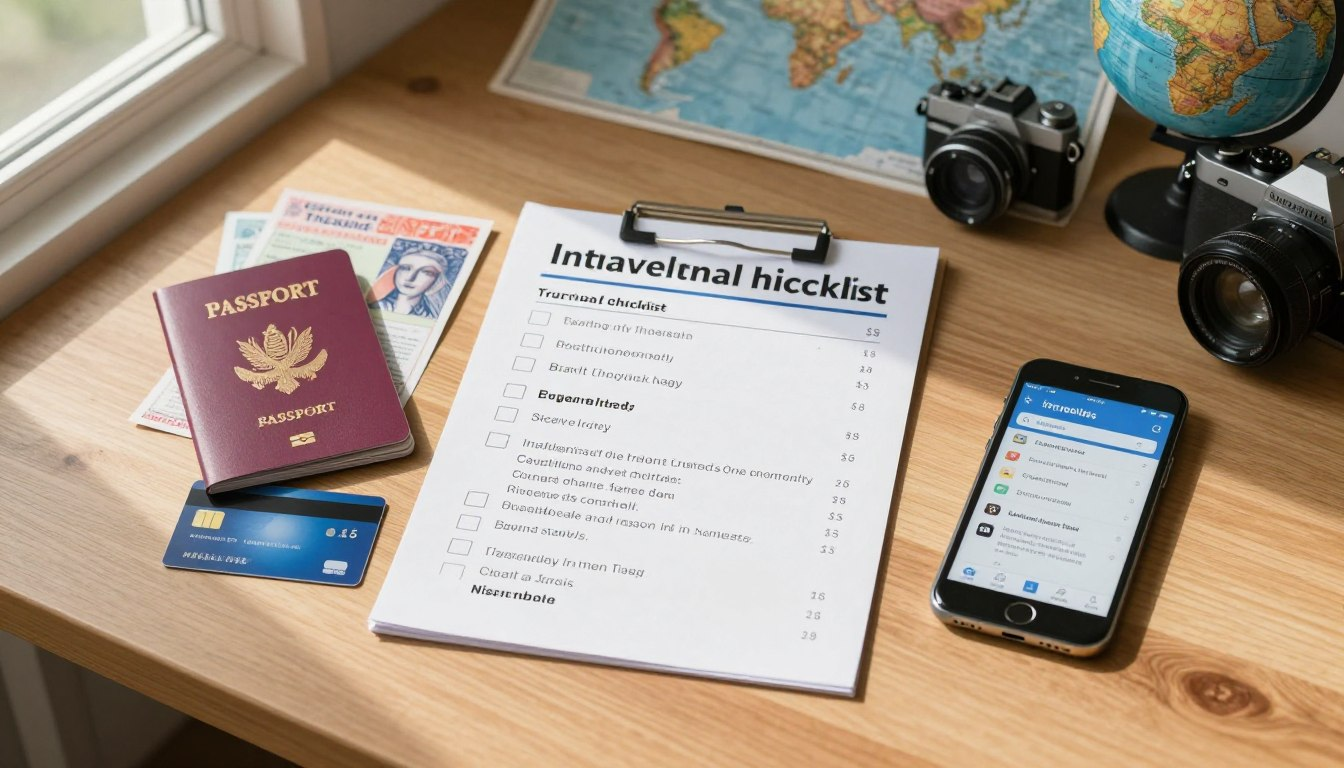
First, check your passport. It should be valid for at least six months after you return. Also, check what you need to enter your destination early to avoid delays.
Managing your money and phone is key for a seamless experience. Tell your bank about your trip to use your debit cards abroad. A good international travel checklist keeps you organized and ready.
Key Takeaways:
- Verify Documents: Make sure your ID and entry permits are up to date before you leave.
- Stay Connected: Set up your phone and banking alerts to keep your services running smoothly.
1. Passport Requirements for International Travel
Getting ready for international travel starts with checking your passport needs. Your passport proves who you are and where you’re from.
Checking Your Passport Validity
First, see if your passport is good for travel. Many places need your passport to be valid for at least six months after you leave.
It’s smart to check your passport’s end date early. This way, you won’t have last-minute problems.
Understanding the Six-Month Passport Rule
The six-month rule is common. It means your passport must be valid for six months after you come back. If not, you might not get in or could have trouble.
Renewing Your Passport Before Travel
If your passport is close to expiring or has expired, renew it before you go. Renewing can take weeks or months. So, plan early.
Make sure you have enough time for renewal before you leave. This avoids travel problems.
Ensuring You Have Enough Blank Pages
Some places need a certain number of blank pages for visa stamps. Check your destination’s rules to see how many you need.
If you’re low on blank pages, renew your passport. This prevents travel issues.
2. Understanding Visa Requirements for Your Destination
Knowing the visa needs for your trip is key. Visa rules change a lot from country to country. Without the right visa, you might not get in or could face legal trouble.
How to Check If You Need a Visa
To see if you need a visa, check the country’s official website. Many countries have online tools to help you. You can also talk to the embassy or use travel sites for the latest visa info.
Different Types of Travel Visas
There are many visa types, each for a specific reason. Knowing which one you need is important for a good trip.
Tourist Visas
Tourist visas are for fun trips or visiting loved ones. The rules for these visas vary. Some countries let you in without a visa, while others need an application.
Business Visas
Business visas are for work trips. You’ll need papers from your job or an invite from someone in the country.
Transit Visas
Transit visas are for quick stops on your way to somewhere else. These visas might be easier to get than others, but you should apply early.
| Visa Type | Purpose | Typical Requirements |
|---|---|---|
| Tourist Visa | Leisure, visiting family/friends | Proof of travel plans, accommodation, sufficient funds |
| Business Visa | Business meetings, conferences | Letter from employer, invitation from business partner, proof of funds |
| Transit Visa | Passing through to another destination | Proof of onward travel, sometimes proof of funds |
Visa-on-Arrival vs. eVisa Options
Some places offervisa-on-arrivaloreVisaoptions. A visa-on-arrival is given at the airport. An eVisa is applied for online. Both are convenient, but visa-on-arrival is quicker, and eVisa is easier to plan.
Processing Times and Application Tips
Visa processing times vary a lot. Apply early to avoid problems. Make sure you have all needed documents and fill out the form right to avoid delays.
By knowing visa rules and planning ahead, you can have a better travel experience.
3. Applying for Travel Visas Successfully
Getting a travel visa can seem hard, but it’s easier with the right help. To apply successfully, you need to know the steps and prepare well.
Gathering Required Documentation
The first thing to do is gather all needed documents. You’ll need a valid passport, proof of your travel plans, and money to support you. Make sure your passport is good for at least six months after you leave. Other documents might be needed based on your visa type and the country’s rules.
Completing Visa Application Forms
Filling out the visa application form right is key. Fill it out honestly and fully, as mistakes can cause delays or denial. Most places now have online forms, but some need a paper one.
Scheduling Visa Interview Appointments
Some visas need an interview at the embassy or consulate. Book your interview early to avoid problems. Get ready by practicing common questions and having all your documents ready.
Tracking Your Visa Application Status
After you apply, it’s important to track your application. Many services let you track online. Keep your application number ready to check on it.
4. Setting Up Your Credit and Debit Cards for Overseas Use

Getting your credit and debit cards ready for international travel is key. It makes sure your financial tools work with international transactions. This can save you from trouble during your trip.
Notifying Your Bank About Travel Plans
Tell your bank about your travel plans before you go. This step stops your transactions from being seen as suspicious. Inform your bank about where you’re going and how long you’ll stay to avoid card issues.
Choosing the Best Travel Credit Cards
Picking the right credit card for travel is important. Look for cards that offer benefits for travelers.
Cards with No Foreign Transaction Fees
Look for cards without foreign transaction fees. These fees can add up fast. A card without these fees can save you money.
Travel Rewards and Benefits
Many travel credit cards offer rewards and benefits. These can include points or miles for travel, hotel stays, or other travel costs.
| Credit Card | Foreign Transaction Fees | Travel Rewards |
|---|---|---|
| Card A | No | 2x points on travel |
| Card B | Yes (3%) | 1x point on all purchases |
| Card C | No | 5x miles on airline purchases |
Setting Up PIN Numbers for International Use
Make sure your PIN numbers work for international use. Some banks need you to ask for international PIN access.
Understanding Dynamic Currency Conversion
Abroad, you might be offered to pay in your home currency. This is called Dynamic Currency Conversion (DCC). Avoid using DCC because it often has bad exchange rates.
By following these steps, you can make sure your cards are ready for international use. This makes your travel smoother and more fun.
5. Configuring Your Phone for International Travel
To travel abroad easily, you need to set up your phone for international use. This includes several important steps. They help you stay connected without spending too much money.
Unlocking Your Phone for International Use
First, make sure your phone is unlocked. An unlocked phone lets you use local SIM cards or international SIM cards. This can help lower your roaming costs. Check with your carrier to see if your phone is unlocked or if you need to unlock it.
International Roaming Plans and Costs
It’s important to know about your carrier’s international roaming plans and costs. These plans vary a lot. Choosing the right one can save you a lot of money.
Carrier-Specific International Plans
Carriers offer different international plans. Some plans have a flat rate for data and voice, while others charge per MB. For example, some major carriers include international coverage in their standard packages.
Daily vs. Monthly Roaming Options
You can pick between daily and monthly roaming plans. Daily plans are good for short trips. Monthly plans are better for longer stays abroad.
Purchasing International SIM Cards or eSIMs
Another option is buying an international SIM card or eSIM. These offer local rates for data, calls, and texts. An eSIM is a good choice because it doesn’t need a physical SIM card.
Essential Travel Apps to Download Before You Go
Downloading the right travel apps can make your trip better. You’ll need translation services, navigation tools, and currency converters.
Translation Apps
Apps like Google Translate help you talk to locals, read signs, and understand menus in other languages.
Navigation and Maps Apps
Apps like Google Maps give you detailed maps, directions, and traffic updates. They help you find your way in new places.
Currency Converter Apps
Currency converter apps let you quickly change currencies. They help you keep track of your spending and make smart choices.
By following these steps and downloading the right apps, you’ll be ready for your international trip. You’ll stay connected and informed on your journey.
6. Managing Money and Currency Abroad
Traveling abroad means you need to manage your money well. You should have cash, cards, and know how to deal with money issues.
How Much Cash to Carry Internationally
It’s key to have the right amount of cash and cards. Carry both local currency and cards for all your needs.
Where to Exchange Currency for the Best Rates
To get the best rates, don’t exchange money at airports or tourist spots. These places often charge more. Use ATMs or local currency exchange offices for better deals.
Using ATMs Abroad Safely
Be careful when using ATMs abroad. Make sure you’re in a safe place. Tell your bank you’re traveling to avoid any problems.
Keeping Emergency Backup Funds
It’s smart to have a spare card somewhere else from your wallet. This way, you’re ready for emergencies if your main card is lost or stolen.
| Financial Tool | Purpose | Benefits |
|---|---|---|
| Local Currency | Immediate expenses upon arrival | Convenient for initial expenses |
| Credit/Debit Cards | Larger transactions and emergencies | Widely accepted and secure |
| Spare Card | Emergency backup | Provides financial security in case of loss or theft |
7. Securing Essential Travel Documents and Copies
Getting ready for international travel means securing your important documents. This includes your passport, visa, travel insurance, and ID.
Creating Physical Copies of Important Documents
Make copies of your key documents like your passport and visa. Give one to a trusted friend or family member at home. Also, carry a copy with you, but keep it separate from the originals.
Storing Digital Backups Securely
Save digital versions of your documents safely online. Scan them and upload to a secure cloud storage service.
Using Cloud Storage for Travel Documents
Use cloud storage to keep your documents safe and easy to reach. This way, you can get them back if you lose the physical copies.
Sharing Itinerary Details with Family
Share your travel plans with family or friends. Include your flight and where you’ll stay. This way, someone knows where you are and can help if needed.
8. Travel Insurance and Health Documentation

As you get ready for international travel, think about travel insurance and health documents. The right coverage and documents can make your trip better. They offer peace of mind and protect you from unexpected costs.
Choosing the Right Travel Insurance Policy
Travel insurance is affordable, starting at just a few dollars a day. It covers many things like trip cancellations, medical emergencies, and lost luggage. Choose a policy that covers adventure activities if you plan to hike, ski, or do other risky sports. Make sure it also has good medical coverage, including evacuations if needed.
Required Vaccinations for International Destinations
Some places need proof of vaccinations to enter. Find out what your destination requires early on. Ask your doctor or a travel clinic about the vaccines and meds you need. This keeps you healthy and follows the entry rules.
Carrying Prescription Medications Across Borders
If you take prescription meds, carry them in their original packaging. Also, bring a copy of your prescription and a doctor’s letter. Check if your meds are legal in your destination countries. Some places have strict rules about certain drugs.
International Health Insurance Cards
Having an international health insurance card can make getting medical care easier abroad. Some cards let you bill your insurance directly, saving you money. Check if your health insurance covers you abroad. If not, consider a travel health insurance policy with a card.
9. Your Complete International Travel Checklist
A good travel checklist makes your trip smooth and fun. When you’re getting ready for your trip abroad, make sure everything is planned out.
Essential Documents Checklist
First, let’s talk about the important documents you need. These are:
- A valid passport with at least six months’ validity
- Required visas for your destination(s)
- Photocopies of your passport and visas
- Travel insurance documents
- Health insurance card (if applicable)
- Driver’s license or government-issued ID
Financial Tools Checklist
Next, make sure you have the right money tools for your trip:
- Credit cards with no foreign transaction fees
- Debit cards for international use
- Local currency for your destination (some for immediate expenses upon arrival)
- A money belt or secure wallet
Technology and Phone Setup Checklist
For staying connected and finding your way, check this:
- A phone unlocked for international use
- An international roaming plan or a local SIM card
- A portable charger for extra power on the go
- Essential travel apps downloaded
Final Pre-Departure Tasks
Before you go, do these last things:
- Notify your bank and credit card companies of your travel plans
- Check the weather forecast for your destination and pack right
- Register with your government’s travel advisory program
- Make digital copies of your important documents and leave a copy with someone you trust
Here’s a summary table to help you see your checklist:
| Category | Items to Check | Notes |
|---|---|---|
| Documents | Passport, Visas, Travel Insurance, Health Insurance Card | Ensure validity and make photocopies |
| Financial Tools | Credit Cards, Debit Cards, Local Currency | Avoid foreign transaction fees |
| Technology | Unlocked Phone, International Roaming, Portable Charger | Stay connected and navigate easily |
| Pre-Departure Tasks | Notify Bank, Check Weather, Register with Travel Advisory | Complete these tasks before leaving |
10. Conclusion
Now that you have your international travel checklist ready, you’re set for a stress-free trip. It’s important to have all the must-have items in order for a smooth journey.
This guide helped you check your passport’s validity and understand visa needs. You also set up your credit and debit cards for international use and configured your phone for overseas travel.
Your checklist is now complete. It covers essential documents, financial tools, and technology setup. You’ve also taken care of travel insurance, health documentation, and made digital copies of important documents.
With this preparation, you’ll enjoy your international adventure without stress. You’re ready for anything that might come up, so you can focus on the fun of your trip.
FAQ
Q: Why is the six-month rule so important for my passport validity?
A: Many countries, like Italy, Thailand, and Brazil, need your passport to be valid for six months after you leave. If it’s not, airlines might not let you board. Immigration could also stop you from entering. Always check your passport’s expiration date before traveling.
Q: How can I avoid high roaming charges on my phone while traveling overseas?
A: Make sure your phone is unlocked by your carrier before you go. Then, use a digital eSIM from Airalo or Holafly for affordable data. This way, you can use Google Maps and Uber without a huge bill.
Q: Which credit cards are best for an overseas trip to avoid extra fees?
A: Choose a card with no foreign transaction fees. Cards like the Chase Sapphire Preferred or Capital One Venture X save you money abroad. Also, consider a Charles Schwab debit card for no ATM fees worldwide.
Q: Do I really need travel insurance for every international journey?
A: Yes, get a policy from Allianz Travel or World Nomads. Most health insurance doesn’t cover emergencies abroad. A good policy covers trip cancellations, lost luggage, and medical costs.
Q: How do I find out if I need a visa for my destination?
A: Check the official government website of your destination or the U.S. Department of State’s country page. Many countries offer eVisas or Electronic Travel Authorizations. You can apply online and get them in a few days.
Q: What is Dynamic Currency Conversion, and why should I avoid it?
A: Dynamic Currency Conversion (DCC) lets merchants charge you in U.S. Dollars instead of local currency. It’s not a good deal. Always pay in the local currency to save money.
Q: How should I organize my travel documents for safety?
A: Keep both physical and digital copies of your travel documents. Carry a paper copy of your passport and vaccination records in a separate bag. Use Google Drive or Dropbox for digital storage. Share your itinerary with a family member for extra safety.
Leave a Reply