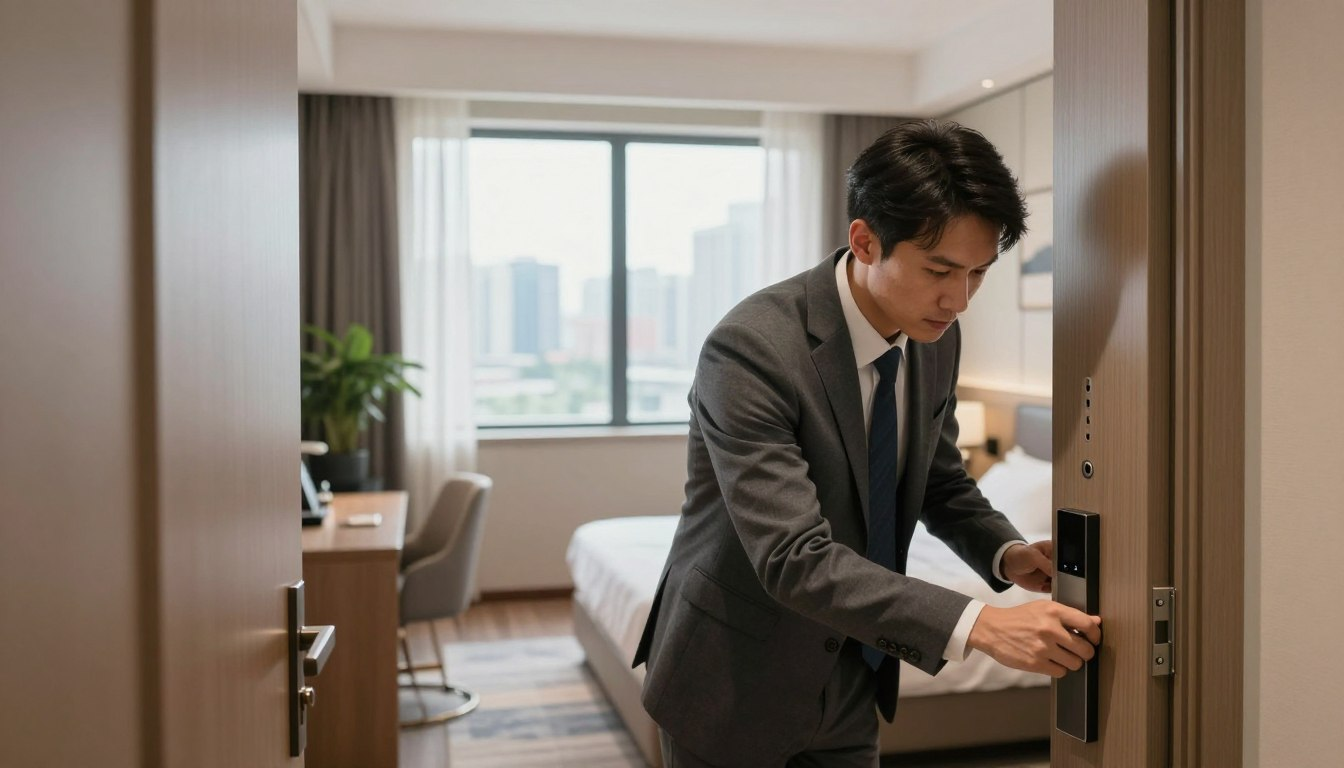
Ever thought about the safety of your hotel room? You’ve traveled all day to your Marriott suite. You’re ready to relax and kick off your shoes.
But first, take a few minutes for this hotel room safety checklist. It could save you from a bad night. Protecting your peace of mind starts when you enter any new place.
Checking for hotel safety measures keeps bed bugs away. Make sure the deadbolt and peephole work. It’s easy to miss these when you’re tired from traveling.
But, taking care of yourself means a better trip. This quick check keeps you safe in a new city. It makes your stay much more comfortable.
Key Takeaways:
- Inspecting entry points ensures privacy and physical protection from intruders.
- Scanning furniture and linens prevents bringing unwanted pests back home.
Essential First Steps Upon Room Entry
When you enter your hotel room, it’s important to do a few key things. These steps help keep you safe and ready for any emergency. They also make your stay more comfortable.
Conduct an Initial Visual Sweep
First, do a quick look around the room. Check for any mess or signs of trouble, like open windows or broken locks. This helps spot any big problems right away.
Test the Main Door Lock Immediately
Make sure the main door lock works by trying it a few times. A broken lock is a big safety risk. If it doesn’t work, ask for a different room.
Locate Emergency Exits and Fire Escape Routes
Find the emergency exits and fire escape routes. The U.S. Fire Administration says to count doors to the nearest exit. Knowing this is key for quick escapes, even when it’s dark.
- Identify the nearest emergency exits.
- Count the doors between your room and the exits.
- Note the location of fire alarms and extinguishers.
Keep Your Luggage in a Safe Spot During Inspection
While checking the room, keep your bags in sight. This stops theft and lets you keep an eye on your stuff. Put your bags on a rack or near you as you look around.
By doing these first steps, you can greatly improve your safety in the hotel room. These simple steps can really make your stay better.
Door and Entry Point Security Verification

Checking your hotel room’s door and entry points is key to staying safe. A secure door keeps you safe from intruders. It also lets you relax and enjoy your stay.
Testing All Lock Mechanisms
Make sure your hotel room’s locks work right. Check all locks to ensure they’re secure.
Deadbolt and Main Lock Functionality
First, test the deadbolt and main lock. Step outside, let the door close, and check if it locks. Some doors don’t latch automatically, so this is important. Also, test the deadbolt to make sure it works.
Chain Lock or Swing Bar Assessment
Then, check the chain lock or swing bar. These add extra security. Make sure they’re attached and work right.
Keycard or Digital Lock Performance
If your room has a keycard or digital lock, test it. Try going in and out a few times. This ensures the lock works with your key.
Peephole and Door Frame Inspection
Look at the peephole and door frame next. The peephole should be clear and not tampered with. Also, check the door frame for damage or weakness.
Connecting Doors and Adjoining Room Access
If your room has connecting doors, check they’re locked. Test the locks to make sure they work and can’t be opened from the other side.
Window and Balcony Security
Window and balcony security is as important as door security. Check all windows and balcony doors to make sure they’re secure.
Lock Integrity on All Windows
Test the locks on all windows. They should open and close smoothly and lock well.
Sliding Door Security Bars
If you have sliding doors, check the security bars. These bars add extra security against intruders.
Ground Floor and Accessible Window Concerns
Be extra careful with windows on the ground floor or easy to reach. Make sure these windows are secure. If not, tell hotel management.
By following these steps, you can make your hotel room safer. This way, you can enjoy your stay without worry.
Hidden Camera Detection: Your Hotel Room Safety Checklist Priority

Ensuring your safety in a hotel room means checking for hidden cameras. Hidden cameras in rentals and hotels are common. Look for tiny holes, unusual spots, or anything that doesn’t belong.
High-Risk Areas to Inspect Thoroughly
Some areas in a hotel room are more likely to have hidden cameras. It’s important to check these spots carefully.
Smoke Detectors and Carbon Monoxide Alarms
These devices are often in corners or on ceilings. They might hide cameras. Check if they look tampered with or installed strangely.
Air Vents and Wall Fixtures
Air vents and wall fixtures can hide small cameras. Look for signs of tampering or if they seem loose.
Television and Electronic Devices
Modern TVs and devices can be used for surveillance. Check for unusual cables or if they seem modified.
Alarm Clocks and USB Chargers
These devices can hide cameras. Look for odd features or placement.
Mirrors and Picture Frames
Two-way mirrors or hidden cameras in frames are common. Check if the mirror or frame seems odd or if there’s a gap.
Effective Detection Techniques
There are ways to find hidden cameras. Using these methods can help you find surveillance devices.
Flashlight Lens Reflection Method
Shine a flashlight around the room. Look for reflections from camera lenses. This works because lenses reflect light.
Smartphone Camera Infrared Detection
Smartphones can detect infrared light from lenses. Turn off the lights and scan the room with your camera for unusual glows.
Network Scanner Apps for Wireless Cameras
Wireless cameras send their feed. Network scanner apps can find these by showing unknown devices on the network.
Physical Inspection for Unusual Holes or Objects
A thorough physical check is key. Look for small holes or objects that seem odd or out of place.
What to Do If You Find a Hidden Camera
If you suspect or find a hidden camera, stay calm and follow the right steps.
First, do not touch the device. Tell hotel management or security right away. If you feel threatened, call local police.
Documenting evidence is helpful but be careful not to mess with the device. Take photos or notes about the camera’s location and description.
Lastly, consider moving to a different room or hotel if you feel your privacy has been broken.
Comprehensive Bed Bug Inspection

Bed bugs can hide anywhere in hotels. It’s important to check your room carefully. This is part of your hotel room safety checklist.
Priority Inspection Zones
When checking for bed bugs, focus on certain areas. These include:
- Mattress Seams and Piping: Pull back the sheets and check the mattress seams and piping.
- Box Spring and Bed Frame Crevices: Bed bugs hide in the box spring and bed frame’s crevices.
- Headboard Mounting and Behind Area: Look at the headboard, where it meets the wall.
- Nightstands and Upholstered Furniture: Check nightstands, chairs, and upholstered furniture for bed bugs.
Mattress Seams and Piping
Start by pulling back the sheets. Then, inspect the mattress seams and piping. Use a credit card to scrape along the seams to find bed bugs or eggs.
Box Spring and Bed Frame Crevices
Bed bugs hide in the box spring and bed frame’s crevices. Use a flashlight to see these dark spots well.
Headboard Mounting and Behind Area
The headboard is a common hiding spot for bed bugs. Check it carefully, focusing on where it meets the wall.
Nightstands and Upholstered Furniture
Don’t forget to check nightstands, chairs, and upholstered furniture. Bed bugs can hide in their seams and crevices.
Identifying Bed Bug Warning Signs
Look for signs of bed bugs, not just the bugs themselves.
Live Bugs and Shed Exoskeletons
Search for live bed bugs, which are 4-5 mm long and reddish-brown. Also, look for shed exoskeletons, which show bed bug growth.
Dark Spots and Blood Stains on Linens
Dark spots or blood stains on linens can mean bed bugs. These stains happen when bed bugs are crushed or when they excrete blood.
Musty Odor Indicators
A sweet, musty smell can also mean bed bugs. This smell comes from the bugs’ pheromones.
Protective Measures If Inspection Raises Concerns
If you find signs of bed bugs, act fast. First, tell hotel management right away. They should help you find a new room or solve the problem.
To stay safe, use a portable bed bug heater. Or keep your luggage in a bathtub or on a luggage rack, away from the bed and walls.
Fire Safety and Emergency Preparedness Check
Checking into a hotel room means making sure you’re safe. This includes several important steps to keep you safe in an emergency.
Smoke Detector and Alarm Verification
First, check the smoke detector in your room. It’s your first defense against fires. Look for a light; if it’s off or looks tampered with, tell the front desk right away.
Visual Inspection for Tampering or Damage
Look at the smoke detector for any signs of tampering or damage. Make sure it’s stuck to the ceiling right and looks untouched.
Testing Functionality When Possible
If you can, test the smoke detector as the maker says or as the hotel tells you. This makes sure it works.
Mapping Your Emergency Exit Strategy
It’s key to know how to get out fast in case of a fire. Take a moment to learn the room’s layout and the area around it.
Primary Exit Route to Nearest Stairwell
Find the main way out to the nearest stairwell. It should be clear and not blocked by anything.
Secondary Escape Route Alternative
Also, find a backup way out. This could be another door or window, in case the main one is blocked.
Counting Doors to Exits in Darkness
Practice counting doors to exits in the dark. This helps you find your way if there’s a fire or no power.
Fire Safety Equipment Location
It’s important to know where fire safety gear is. This helps you act fast in an emergency.
Fire Extinguisher Accessibility
Find the fire extinguisher and make sure it’s ready. Also, know how to use it.
Emergency Instructions and Contact Numbers
Read the emergency instructions in your room. Also, know the hotel’s emergency numbers.
| Fire Safety Measure | Description | Importance Level |
|---|---|---|
| Smoke Detector Verification | Check for functionality and tampering | High |
| Emergency Exit Mapping | Identify primary and secondary exit routes | High |
| Fire Extinguisher Location | Know the location and ensure accessibility | Medium |
| Emergency Contact Information | Familiarize yourself with hotel emergency contacts | High |
By following these steps, you make your stay much safer. Knowing your hotel’s fire safety measures is key to being ready for emergencies.
Additional Safety Inspections and Hazard Assessment
Checking your hotel room for safety is more than just a quick look. It needs a detailed safety check and hazard assessment. This detailed check finds risks and makes your stay safe and comfy. By doing a thorough check, you can lower the chance of safety problems.
Bathroom Safety Evaluation
The bathroom is key to check for safety risks. A good check can stop accidents and make bathing safe.
Hot Water Temperature Testing
It’s important to test the hot water to avoid burns. Make sure the water isn’t too hot and adjust it if needed.
Slip Hazards and Bath Mat Availability
Look for slip risks like wet floors or bad lighting. Make sure there’s a bath mat to stop slipping.
Grab Bar Stability
Check the grab bars in the shower or tub. They should be strong and hold your weight.
Ventilation Fan Operation
Make sure the ventilation fan works well. This stops moisture buildup and prevents mold and mildew.
Mold and Mildew Detection
Look for mold or mildew, like in the shower or around the sink. Tell hotel staff if you find any.
Electrical Safety Inspection
Electrical safety is very important in hotel rooms. An inspection can find electrical dangers.
Outlet Condition and Grounding
Check the outlets to make sure they work and are grounded right.
Exposed Wiring or Damaged Cords
Look for exposed wiring or damaged cords from appliances or lights. Tell hotel staff if you see any.
Hair Dryer and Appliance Safety
Test the hair dryer and other appliances to make sure they work safely.
Climate Control and Air Quality
Keeping the indoor climate comfy and healthy is important. Check the HVAC system and air quality.
HVAC System Functionality
Make sure the HVAC system works well to keep the room at a good temperature.
Unusual Odors or Poor Ventilation
Check for odd smells or poor air flow. Make sure the room has good air to avoid stale air.
Safeguarding Your Valuables
Keeping your things safe is key in hotel room safety. Use the security features to keep your stuff safe.
In-Room Safe Testing and Usage
Test the in-room safe to make sure it works. Use it for valuable items like passports, jewelry, and cash.
Secure Storage for Documents and Electronics
Keep important documents and electronics in a safe place, like the in-room safe or a secure bag.
Using the Do Not Disturb Sign Strategically
Use the “Do Not Disturb” sign when you’re not in or sleeping. It helps keep intruders away.
| Safety Inspection Area | Key Checks | Importance Level |
|---|---|---|
| Bathroom Safety | Hot water temperature, slip hazards, grab bar stability, ventilation fan operation, mold and mildew detection | High |
| Electrical Safety | Outlet condition, exposed wiring, hair dryer and appliance safety | High |
| Climate Control and Air Quality | HVAC system functionality, unusual odors, poor ventilation | Medium |
| Safeguarding Valuables | In-room safe usage, secure storage, “Do Not Disturb” sign usage | High |
Conclusion
Keeping safe in a hotel is very important. A detailed hotel room safety checklist helps a lot. Just a few minutes to check your room when you arrive can make a big difference.
Looking around quickly can show you any problems. This could be broken locks or hidden cameras. Finding these issues early lets you fix them fast.
This simple step can make you feel safer. It lets you enjoy your stay without worry. Adding a safety checklist to your travel plans can reduce risks and increase comfort.
When you know your room is safe, you can really relax. This makes your trip even better.
FAQ
Q: Why should I follow a hotel room safety checklist every time I check in?
A: A safety checklist ensures the hotel’s safety measures work. It helps spot security flaws, like broken locks or hidden cameras, for a safe stay.
Q: What are the most critical room inspection essentials for detecting bed bugs?
A: Check the mattress seams, headboard, and upholstered furniture for signs of bed bugs. Keep your luggage off the bed until you’ve checked.
Q: How can I verify that room security features are working properly?
A: Test the deadbolt, security latch, and connecting door locks. Make sure the door closes and locks by itself. Also, check the peephole.
Q: What guest room safety guidelines should I follow for fire emergencies?
A: Know the evacuation map, count doors to the exit, and check the smoke detector. Never use the elevator in a fire.
Q: Are there specific accommodation safety tips for solo travelers?
A: Yes, solo travelers should not share their room number and use a door wedge for extra security. Always lock windows and balcony doors from inside.
Q: What is the best way to maintain traveler safety in hotels regarding personal privacy?
A: Look for hidden cameras in sensitive areas. Use your phone’s light to find lens reflections and scan for unusual Wi-Fi signals.
Q: What should I do if my hotel security checklist reveals a problem?
A: If you find a problem, like a faulty lock or pest issue, tell the front desk right away. Ask for a new room that passes your safety check.
Q: What are the room security best practices for using the in-room safe?
A: Test the safe with a simple code while the door is open. Make sure it’s bolted to the furniture or wall.
Leave a Reply