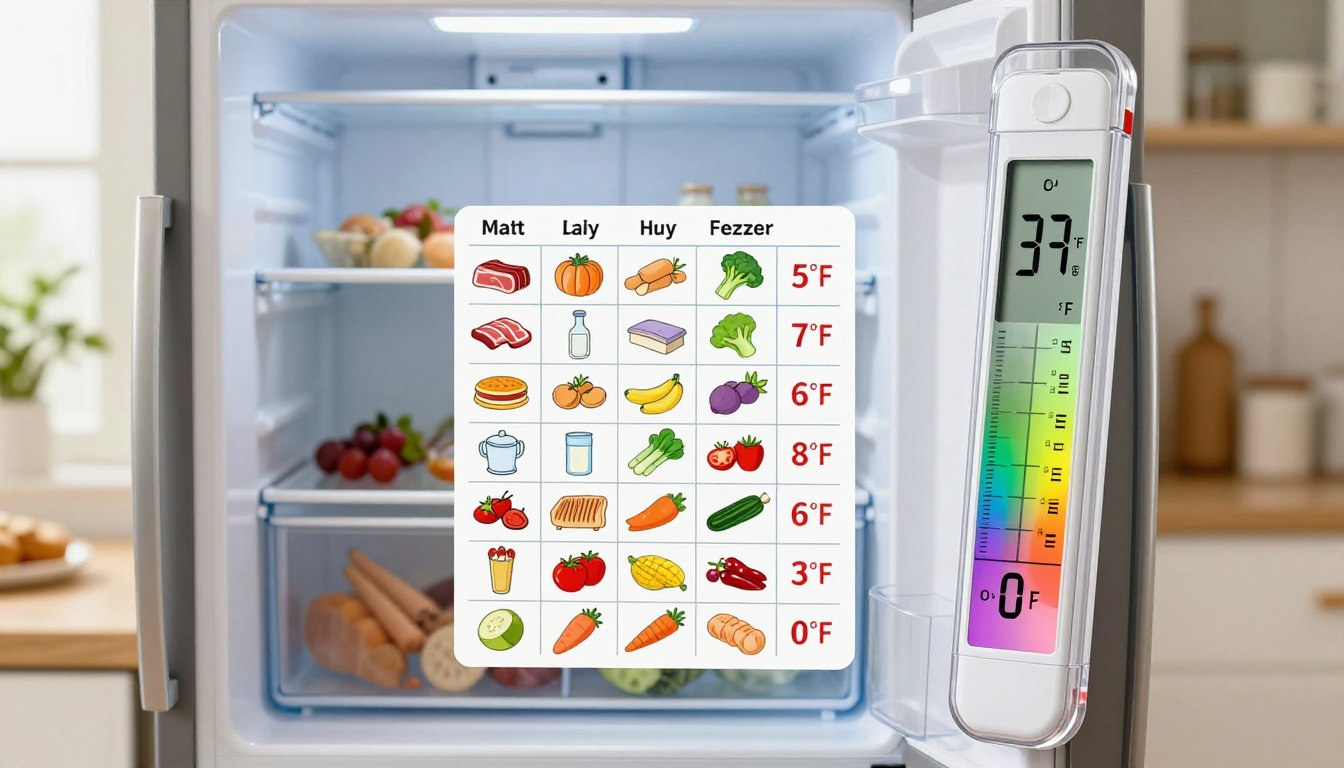
Ever wonder if that gallon of milk is safe? Or is your fridge just a guess? Most people don’t check until something smells bad or ice cream melts.
Keeping the right chill is key to slow down bacteria and keep food fresh longer.
Your fridge should be between 35° to 38°F. The freezer should be at or below 0°F to stop food from spoiling. Following these refrigerator temperature guidelines keeps your food tasty and your fridge working well.
This guide has a freezer and fridge temperature chart to help you quickly learn these settings. You’ll learn how to fix common fridge problems to keep your home safe from food sickness. By knowing these simple fixes, you can save on electricity and enjoy the freshest food.
Why Your Refrigerator and Freezer Temperature Matters for Food Safety
Keeping your kitchen appliances at the right temperature is key. Your fridge and freezer do more than just cool your food. They help keep your food safe and good to eat.
The Connection Between Temperature and Bacterial Growth
Bacteria grow fast between 40°F and 140°F. This is called the “danger zone.” A cold fridge slows down bacteria, making food safer.
The USDA says, “Refrigeration at 40°F or below is key to slow down bacteria.”
Right fridge storage temperatures stop bacteria from growing. This is very important for foods that spoil easily like meat and dairy.
How Proper Temperatures Save You Money
Right temperatures in your fridge and freezer save money. They use less energy and keep food fresh longer. This means you waste less food and spend less on new items.
Keeping your freezer at the right freezer temperature safety keeps food fresh. This means you don’t have to throw it away as often.
Protecting Food Quality and Nutritional Value
Right temperatures also keep food quality and nutrients high. Wrong temperatures can ruin vitamins and change how food tastes and feels. A cold fridge and freezer keep your food good for longer.
This shows you care about eating healthy and managing food well.
Freezer and Fridge Temperature Chart: Your Complete Guide to Safe Ranges
To keep your food fresh and safe, knowing the right fridge and freezer temperatures is key. The FDA says keep your fridge at 40°F or below. Your freezer should be at 0°F or below to stop bacteria and spoilage.
Recommended Fridge Storage Temperatures
Your fridge should be at 40°F (4°C) or below. This slows down bacteria, keeping food fresh longer. Remember, different fridge parts can have different temperatures.
- The back of the top shelf is usually the coldest part.
- The door shelves are the warmest due to frequent opening and closing.
Optimal Freezer Temperatures for Long-Term Preservation
For keeping food frozen for a long time, your freezer should be at 0°F (-18°C) or below. This keeps your frozen foods safe and good to eat.
Key points to remember:
- Freeze foods at 0°F (-18°C) or below to prevent bacterial growth.
- Label and date your frozen foods to ensure you use the oldest items first.
Understanding the Temperature Danger Zone
The danger zone is between 40°F and 140°F (4°C and 60°C). Bacteria grow fast here. It’s important to keep perishable foods out of this range to avoid foodborne illnesses.
Be aware of the danger zone when:
- Storing perishable foods.
- Cooking or reheating food.
Quick Reference Chart for All Appliance Types
Here’s a quick chart to help you keep your fridge and freezer at safe temperatures:
| Appliance | Recommended Temperature |
|---|---|
| Refrigerator | 40°F (4°C) or below |
| Freezer | 0°F (-18°C) or below |
How to Accurately Measure Your Appliance Temperatures
To keep your food fresh and safe, it’s key to measure your appliance temperatures right. Use an independent thermometer for fridge temperature accuracy.
Choosing the Right Appliance Thermometer
There are many thermometers for your fridge or freezer. You can pick between digital and analog thermometers. Digital ones give quick and precise readings. Analog ones are easy to use.
Best Locations to Place Your Thermometer
It’s important to put your thermometer in the right spot. For fridges, put it on the middle shelf, away from walls and heating elements. For freezers, place it near the center, but not touching frozen foods or walls.
When and How Often to Check Temperature Readings
Check your appliance temperatures at least once a week. Also, check after big changes, like adding lots of food or after a power outage.
| Appliance | Thermometer Placement | Checking Frequency |
|---|---|---|
| Fridge | Middle shelf, away from walls and heating elements | At least once a week |
| Freezer | Near the center, avoiding direct contact with frozen foods or walls | At least once a week |
Refrigerator Temperature Guidelines: Zone-by-Zone Breakdown

To keep food fresh and safe, knowing your fridge’s temperature is key. Each part of your fridge has its own temperature. This affects how long your food stays good.
Understanding Your Fridge’s Temperature Variations
Your fridge has different zones for different needs. Knowing these zones helps you use your fridge better.
Upper Shelves: The Warmest Spot
The top shelves are the warmest. They’re good for items that don’t need to be as cold.
Lower Shelves: Your Coldest Zone
The bottom shelves are the coldest. They’re best for raw meat and fish that need to stay very cold.
Door Shelves: Temperature Fluctuation Central
The door shelves change temperature a lot. They’re best for things like condiments and drinks that don’t mind small temperature changes.
Crisper Drawers: Humidity and Temperature Balance
Crisper drawers keep humidity and temperature just right. They’re perfect for keeping fruits and veggies fresh.
| Fridge Zone | Optimal Temperature Range | Suitable Items |
|---|---|---|
| Upper Shelves | 38°F – 40°F (3°C – 4°C) | Less perishable items, leftovers |
| Lower Shelves | 34°F – 36°F (1°C – 2°C) | Raw meat, fish, highly perishable items |
| Door Shelves | Variable, around 40°F (4°C) | Condiments, beverages |
| Crisper Drawers | 36°F – 38°F (2°C – 3°C) | Fruits, vegetables |
How to Adjust Your Refrigerator’s Temperature Settings
To keep your fridge just right, you can adjust the temperature. Check your fridge’s manual for how to do it. The steps can differ.
Maintaining Freezer Temperature Safety: What You Need to Know
Keeping your freezer at the right temperature is key for food safety. It helps prevent spoilage. Your freezer keeps food fresh and safe by stopping bacteria from growing.
Recommended Freezer Chill Levels for Different Foods
Food types need different storage temperatures. For example, frozen meats, poultry, and seafood must be at 0°F (-18°C) or below. Freezers must be at 0°F or below to stop bacteria.
Some foods, like ice cream, need colder temperatures. Knowing the right temperature for your food helps keep your freezer working well.
Chest Freezer vs. Upright Freezer Temperature Considerations
The freezer type affects temperature. Chest freezers keep temperature steady better because they don’t leak cold air when opened.
Upright freezers might have temperature changes because their doors open more. But, they’re easier to organize and get to your food.
The Ideal Freezer Capacity for Stable Temperatures
Having the right amount of food in your freezer is important. Too much or too little can cause temperature changes. This is because it affects air flow.
Keep your freezer 75% to 85% full. This ensures good air flow and uses space well. It helps your freezer work efficiently and keep food safe.
Common Temperature Problems and Quick Fixes You Can Do Today

Problems with fridge and freezer temperatures can spoil food and raise energy costs. It’s key to keep your fridge cool and freezer cold. This helps your food stay fresh and saves energy.
Quick Fix: Your Fridge Is Running Too Warm
If your fridge is too warm, food spoils fast. Here are quick ways to fix it:
Inspect and Clean Door Seals
Dirty or broken door seals let warm air in. Check the seals for damage or dirt. Clean them with soap and water.
Clean Your Condenser Coils
Dirty condenser coils make your fridge use more energy. Clean the coils every six months to save energy.
Reduce Overcrowding
Too much stuff in your fridge blocks air flow. Take out what you don’t need to keep air moving.
Quick Fix: Your Freezer Temperature Is Too High
A freezer that’s too warm can thaw food. Here’s how to fix it:
Test the Door Gasket Seal
A bad door seal lets warm air in. Test the seal by closing the door on paper. If it slides out, the seal is bad.
Remove Excessive Frost Buildup
Too much frost makes your freezer work harder. Defrost your freezer often to avoid this.
Check the Evaporator Fan
A broken evaporator fan causes temperature problems. Check the fan to make sure it’s working right.
These quick fixes can solve common fridge and freezer temperature issues. They help keep your food fresh and your appliances working well.
Warning Signs Your Fridge or Freezer Temperature Is Wrong
If your fridge or freezer acts strange, it might mean the temperature is wrong. These appliances work hard to keep your food fresh. But, if the temperature is off, they can’t do their job well.
Food Spoiling Before the Expiration Date
When food spoils before it’s supposed to, it’s a bad sign. Bacteria grow fast in warm temperatures. So, it’s key to check your fridge’s temperature often. Make sure it’s at the right fridge temperature guidelines.
Freezer Burn and Ice Crystal Formation
Freezer burn and ice crystals on frozen foods mean trouble. They happen when the freezer is too warm or changes temperature too much. Keeping the right freezer and fridge temperature chart helps avoid this.
Excessive Condensation or Moisture Buildup
Too much moisture inside your fridge or freezer is a warning sign. It can cause mold and harm your appliances. Check the seals and temperature settings to fix this.
Unexpected Freezing in Refrigerator Sections
Some parts of your fridge freezing food too much is a bad sign. It might mean the temperature is too low. Fixing the temperature settings can help.
Your Energy Bills Are Climbing
Higher energy bills might mean your fridge or freezer is working too hard. They do this when the temperature is off. Running them at the right temperature can save energy and money.
To sum up, here are the warning signs and how to fix them:
| Warning Sign | Possible Cause | Quick Fix |
|---|---|---|
| Food spoiling early | Incorrect fridge temperature | Adjust fridge temperature |
| Freezer burn | Too high freezer temperature | Lower freezer temperature |
| Excessive condensation | Temperature or seal issues | Check and adjust temperature, inspect seals |
| Unexpected freezing | Too low refrigerator temperature | Adjust refrigerator temperature |
| Increased energy bills | Inefficient appliance operation | Optimize appliance temperature settings |
Proper Fridge Cooling: Essential Maintenance Tips

Keeping your fridge cool is more than just setting the right temperature. It also needs regular care. To keep your fridge working well, follow these important tips. They help keep your fridge at the right temperature and make it last longer.
Never Block Your Refrigerator’s Air Vents
It’s important to keep the air vents in your fridge clear. These vents help cold air move between the freezer and fridge. If blocked, your fridge won’t cool evenly. Make sure there’s room around the vents for air to flow.
Maintain the Right Amount of Food Inside
Having the right amount of food in your fridge is key. Too little food makes your fridge work too hard. Too much food blocks air vents. Try to keep a balanced amount of food for good air flow.
Let Hot Foods Cool Before Refrigerating
Putting hot foods straight into the fridge can raise its temperature. This can spoil other foods. Let hot foods cool down before putting them in the fridge. This keeps the fridge cool and stops bacteria from growing.
Create a Regular Cleaning Schedule
Cleaning your fridge regularly is important. Dust and dirt on the coils and parts make it work harder. Set a schedule to clean the fridge inside, outside, and coils. This keeps it running well.
Limit How Long You Keep the Door Open
Opening the fridge door for too long lets warm air in and cold air out. This changes the temperature. Try to get what you need fast and close the door quickly. This keeps the fridge cool.
Check and Replace Door Seals When Needed
The door seals are key to keeping your fridge cool. Over time, they can wear out. Check the seals often for damage. Replace them if needed to keep your fridge sealed and efficient.
By following these tips, your fridge will work better. This keeps your food fresh and saves on energy bills. Regular care is essential for proper fridge cooling and a long-lasting appliance.
Smart Storage Strategies for Maintaining Ideal Freezer Temps
Keeping your freezer at the right temperature is key. Organizing your freezer and fridge well helps keep food safe and fresh longer.
Where to Store Different Foods in Your Refrigerator
Storing food in your fridge right is as important as in your freezer. Raw meat, poultry, and seafood go on the bottom shelf. This stops juices from dripping on other foods.
Ready-to-eat foods like leftovers, fruits, and veggies go on upper shelves. It’s important to store food in covered containers. Using airtight containers or zip-top bags helps prevent moisture and keeps your fridge smelling good.
Organizing Your Freezer for Maximum Air Circulation
To keep your freezer at the right temperature, organize it well. Don’t pack it too full. Leave space for cold air to move around.
A tidy freezer keeps the temperature right and makes finding food easier. Use baskets or dividers to sort your frozen foods.
Using the Right Containers to Maintain Temperature Stability
The containers you use in your freezer matter. Use ones that are airtight and made for the freezer.
Freezer-safe containers or bags stop freezer burn and keep food fresh. Glass containers with tight lids are great because they’re safe for freezing and reheating.
Leaving Space Between Items for Cold Air Flow
It’s important to leave space between items in your freezer. Too much stuff can mess with the temperature. This can make food unsafe.
| Storage Tip | Benefit |
|---|---|
| Leave space between items | Allows for cold air circulation |
| Use airtight containers | Prevents freezer burn and maintains freshness |
| Organize with baskets or dividers | Makes it easier to find items and maintain order |
By using these smart storage tips, you can keep your freezer at the right temperature. This keeps your food safe and fresh.
Conclusion
Keeping your fridge and freezer at the right temperature is key. It keeps your food safe and your appliances working well. Make sure your fridge and freezer stay at the right temperature to stop bacteria and keep food fresh.
Check your appliance temperatures often and adjust them if needed. This helps avoid temperature issues. By doing this, your food stays fresh and safe, and you save energy too.
It’s important to keep your appliances at the right temperature. This makes your food safe and helps you save energy. Follow the tips to enjoy healthy food and save energy at the same time.
FAQ
Q: What are the recommended refrigerator temperature guidelines for daily use?
A: Keep your fridge between 35°F and 38°F. This keeps food fresh and safe. The FDA says below 40°F is good, but aim for 35-38°F to handle door openings.
Q: What are the optimal freezer temperatures for long-term food preservation?
A: Freezer temps should be exactly 0°F. This stops bacteria and keeps food fresh. It’s key for Bird’s Eye veggies and Stouffer’s meals.
Q: Where can I find a reliable freezer and fridge temperature chart for reference?
A: Check the guide above for a detailed chart. It shows fridge temps at 35-38°F and freezer at 0°F. Keep it near your fridge for quick checks.
Q: Why is proper fridge cooling so important for my health?
A: Cool fridge temps stop foodborne illnesses. Bacteria grow fast above 40°F. Keep temps safe to slow growth and keep food fresh.
Q: How can I ensure I am maintaining fridge temperatures accurately?
A: Use a thermometer, not just the fridge dial. Place it on the middle shelf for fridge checks. For freezer, put it between frozen items. Check often to keep your fridge running right.
Q: What should I do if my freezer temperature is too high?
A: Check door seals and air vents for blockages. Clean the condenser coils if needed. This helps your freezer cool down.
Leave a Reply